A data strategy is one of the most valuable investments an organisation can make. When built correctly, it transforms data from a passive by-product of operations into a strategic asset that improves decision-making, reduces risk, and drives measurable business outcomes.
The core recommendation is straightforward: treat data as a corporate asset, and align every data initiative to business goals rather than technology preferences.
Why This Matters More Than Most Organisations Realise
Most organisations do not have a data problem. They have a fragmentation problem.
Data exists across dozens of systems, departments, and processes with no common definitions, no shared ownership, and no reliable integration. The finance team works from one version of revenue figures. The sales team works from another. The executive committee receives a report that reconciles neither. Decisions get made slowly, defended poorly, and revisited constantly because no one fully trusts the numbers on the table.
This fragmentation is expensive. It slows agility, reduces profitability, and makes it significantly harder to secure executive buy-in for data investment. When leaders cannot point to a clear connection between data capability and business performance, data remains perpetually underfunded and permanently misunderstood.
The deeper issue is that most organisations continue to treat data as an IT responsibility. Technology teams are asked to solve what is fundamentally a business problem. Governance decisions get made by people who are close to the systems but far from the strategy. The result is infrastructure that is technically functional but commercially irrelevant.
A data strategy changes this. It repositions data as a shared business capability with clear ownership, defined standards, and a direct connection to the decisions that drive organisational performance. Related governance work can help turn this capability into repeatable practice; see our IT governance and policy library.
What a Strong Data Strategy Includes
| Capability | What it enables |
|---|---|
| Data availability | Capture the right data consistently across relevant business processes. |
| Data accessibility | Make data findable, understandable, and usable by the people who need it. |
| Data integration | Connect systems and departments around consistent definitions and sources. |
| Security and compliance | Protect sensitive information and meet legal obligations, including POPIA. |
| Data quality | Set standards for accuracy, completeness, consistency, and timeliness. |
| Visualisation and usability | Present information in meaningful, actionable formats. |
| Governance and ownership | Assign accountability for definitions, standards, quality, and decisions. |
| Data literacy and adoption | Build the skills and confidence to use data in day-to-day work. |
Evidence supports this decision-first approach. McKinsey reports that a survey of more than 700 organisations found analytics investments generated operating-profit increases of about 6% in areas such as competitive intelligence, customer targeting, and operations and supply-chain optimisation. Treat this as research evidence, not a guaranteed return: the value depends on execution and context.
Aligning the Strategy to Business Goals
The most common mistake in data strategy development is starting with technology. Organisations assess their current platforms, identify gaps, and build a roadmap to modernise their infrastructure. This approach almost always produces technically sound recommendations that struggle to gain traction because they have not been connected to what the business is actually trying to achieve.
The right starting point is business goals.
Begin by identifying the strategic priorities that will determine organisational performance over the next three to five years. Growth targets, cost reduction programmes, customer experience improvements, risk management objectives. Then ask a more specific question: what decisions need to be made to achieve these priorities, and what data is required to make those decisions well?
This decision-first approach directs investment toward areas of genuine commercial importance. It also creates the foundation for measuring return on investment, which most data programmes fail to do convincingly.
Prioritise use cases by business value rather than technical interest. The analytics initiative that captures the attention of the data team is not always the one that will have the greatest impact on the organisation. Sequencing matters. Early wins build credibility, and credibility builds the organisational commitment required to sustain a multi-year programme.
Executive sponsorship is not optional. Data strategy requires visible leadership from the top. When senior leaders model data-informed decision-making, reference data in meetings, and hold their teams accountable for evidence-based recommendations, adoption follows. When they do not, even well-funded programmes stall. This leadership perspective is also relevant to building executive sponsorship; read our article on AI, leadership, and decision-making.
Operating Model and Governance
A data strategy that cannot be executed is a document, not a strategy.
Execution requires a target operating model that defines who owns the strategy, how decisions are governed, how standards are set and maintained, and how business and technology teams coordinate effectively. Without this structure, data initiatives fragment along departmental lines and the problems the strategy was designed to solve simply reappear in a more expensive form.
Governance does not need to be complex to be effective. The most important elements are clarity and accountability. Someone must own the data. Someone must own the standards. Someone must be responsible for resolving conflicts when they arise, and someone must be accountable for measuring progress.
Execution should be tracked against outcomes, not activities. Delivering a data catalogue is an activity. Improving the speed and confidence of pricing decisions is an outcome. Strategies that measure activities tend to drift. Strategies that measure outcomes tend to improve.
The governance gap is becoming more urgent as AI adoption accelerates. IBM’s 2025 Cost of a Data Breach research, based on 600 organisations studied by the Ponemon Institute, found that 63% either lacked an AI governance policy or were still developing one. This reinforces the need to pair data literacy with clear guidance on approved tools, access, and responsible use.
Data Culture and Literacy
Technology and governance will only take an organisation so far. The limiting factor in most data strategies is people.
Data literacy, the ability to read, work with, analyse, and communicate with data, is not uniform across organisations. The OECD’s work on skills for a digital world provides useful context for why digital and data capabilities require deliberate investment.
Adoption fails when data tools are deployed without the training and context required to use them well. Dashboards go unused. Reports are printed and filed. Decisions continue to be made on the basis of experience and preference rather than evidence.
Closing this gap requires more than a training programme. It requires leaders who model data-informed behaviour, managers who expect and reward evidence-based reasoning, and an organisational environment where questioning data is encouraged rather than seen as a challenge to authority. Building a data-driven culture is a leadership responsibility before it is a technology one.
Additional partner resources from Info-Tech Research Group can support the data strategy work described here.
Explore more data strategy resources from Info-Tech Research Group, our strategic partner.
The business case is measurable: IBM reports, citing Gartner research, that poor data quality costs organisations an average of US$12.9 million per year. This is a benchmark, not a universal estimate, and organisations should measure their own rework, leakage, and decision risk.
Info-Tech’s data governance guidance recommends aligning governance with business strategy and value streams.
Industry Implications
While the principles of a strong data strategy apply across sectors, the specific pressures and opportunities vary by industry.
In professional services, data silos are a persistent source of lost value. Client information, project performance data, and resource utilisation metrics sit in disconnected systems across practice areas, making it difficult to understand profitability at the client or engagement level, identify cross-selling opportunities, or make informed decisions about capacity and pricing.
In banking and financial services, the rapid adoption of artificial intelligence and machine learning has made the quality of underlying data infrastructure a competitive differentiator. AI models are only as reliable as the data they are trained on; the NIST AI Risk Management Framework highlights the importance of managing data and model risks across the AI lifecycle. Institutions with trusted, well-governed, and consistently structured data will extract more value from these technologies than those without.
The broader point applies to every sector: there is no universal data strategy, but there are universal principles. Every organisation needs a strategy that is fit for its purpose, aligned to its specific business model, and calibrated to its current level of data maturity.
Skills are a strategic constraint, not a secondary consideration. The World Economic Forum’s Future of Jobs Report 2025 identifies AI and big data among the skills expected to grow in importance through 2030. Build capability plans alongside the data roadmap so people can use new platforms, interpret outputs, and challenge poor-quality information.
Recommended Approach
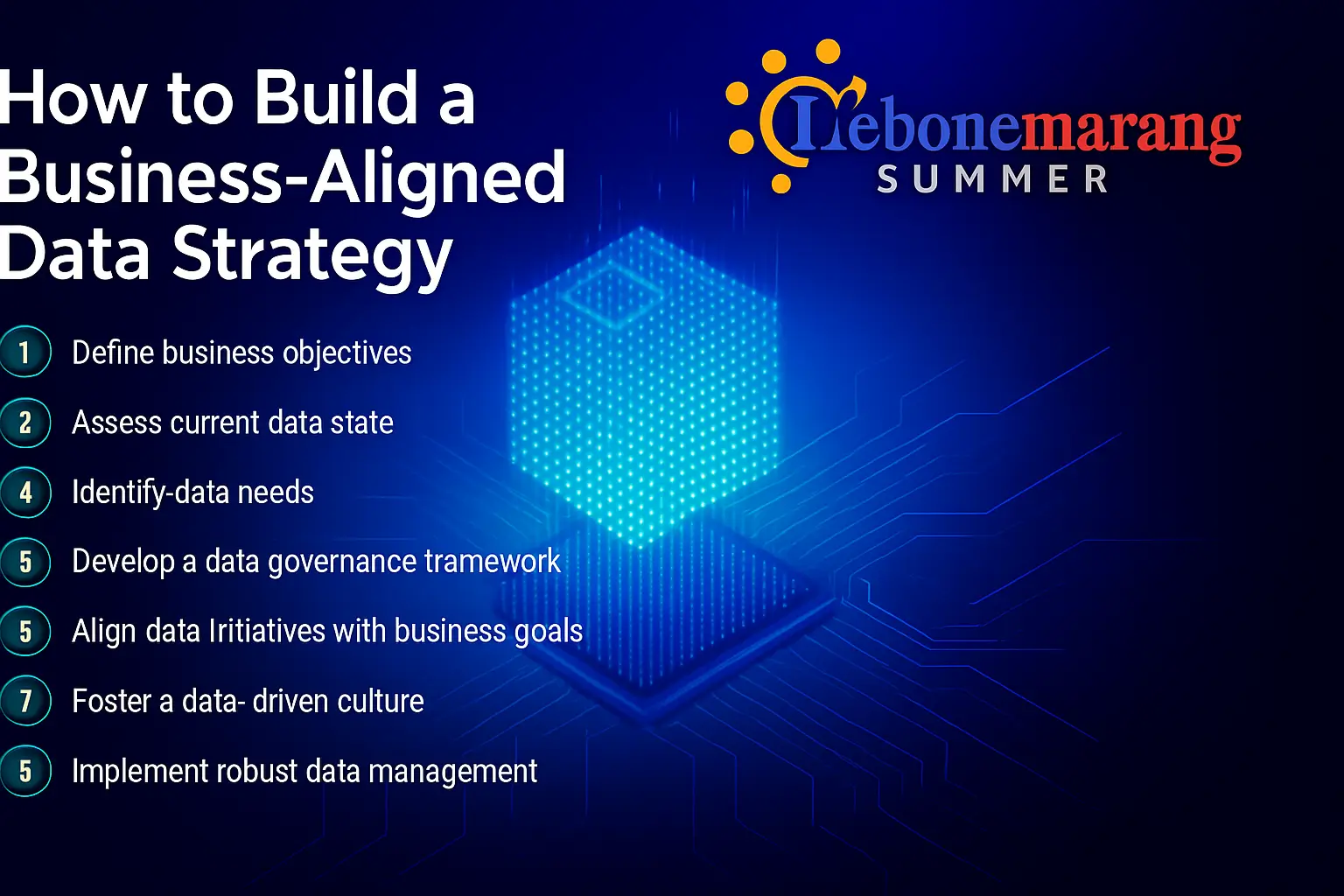
Building a data strategy does not require a large-scale transformation from day one. Use a focused, iterative, outcome-driven approach:
- Assess your current state honestly: map where data exists, how it flows, and where quality breaks down.
- Define the future state in business terms: identify the decisions and outcomes you want to improve before selecting technology.
- Prioritise the highest-value gaps where better data can have measurable impact on performance.
- Build a roadmap with milestones, assigned owners, and defined success measures.
- Review and refine the strategy regularly as business priorities and technology evolve.